
DIY Mold Remediation Alternatives for Health Safety
Table of Contents
- Why DIY Mold Remediation Alternatives Matter for Your Health
- Can Mold Cause Neurological Health Issues?
- EPA Mold Cleanup Guidelines: What DIYers Get Wrong
- Professional Mold Remediation Cost and What It Covers
- Comparing Mold Remediation Alternatives: Products and Services
- When to Stop DIY and Call a Professional
- Legal Options When Mold Exposure Has Already Harmed Your Health
- Frequently Asked Questions
Last Updated: September 29, 2026
Why DIY Mold Remediation Alternatives Matter for Your Health
Mold remediation alternatives are the professional and product-based options that replace scrubbing visible mold yourself, and they matter because mold exposure can trigger respiratory illness, neurological symptoms, and long-term health damage that cleaning alone does not stop. This guide from Abkarian Law Group covers the realistic alternatives to DIY mold remediation for health safety, and when handling the cleanup yourself becomes a health risk rather than a money-saver.
Here is the part most guides skip: the danger is rarely the mold you can see. It is the spores you release into the air the moment you start scrubbing.
Most household cleaners kill surface mold but leave the moisture problem untouched. Within weeks, the colony returns, often larger. Meanwhile, you have inhaled a fresh cloud of spores without a respirator, in a room with no containment and no negative air pressure. That is the trap.
Below, we break down the four alternatives that actually work, from EPA-registered products to full professional remediation, and explain the threshold where DIY stops being safe.
Can Mold Cause Neurological Health Issues?
Yes, mold exposure is associated with neurological symptoms including brain fog, memory problems, headaches, and dizziness, though the research on causation is still developing and reactions vary widely between individuals. The cluster of symptoms sometimes called mold toxicity overlaps heavily with other conditions, which is why diagnosis is contested.
What makes this harder is that many patients are told their symptoms are anxiety or stress. That dismissal delays both treatment and any legal claim.
If you are experiencing neurological symptoms you believe are linked to mold, document everything: dates, symptom logs, photos of the contamination, and every doctor visit. That record becomes evidence later.
This is where the health threshold matters. When symptoms are neurological rather than just a stuffy nose, the case for professional remediation, and for legal advice, gets much stronger.
EPA Mold Cleanup Guidelines: What DIYers Get Wrong
The most common mistake is treating mold as a cleaning problem instead of a moisture problem. The EPA mold cleanup guidance is clear that the first step is fixing the water source. Skip that, and you are cleaning a surface that will be wet again next week.
The second mistake is scale.
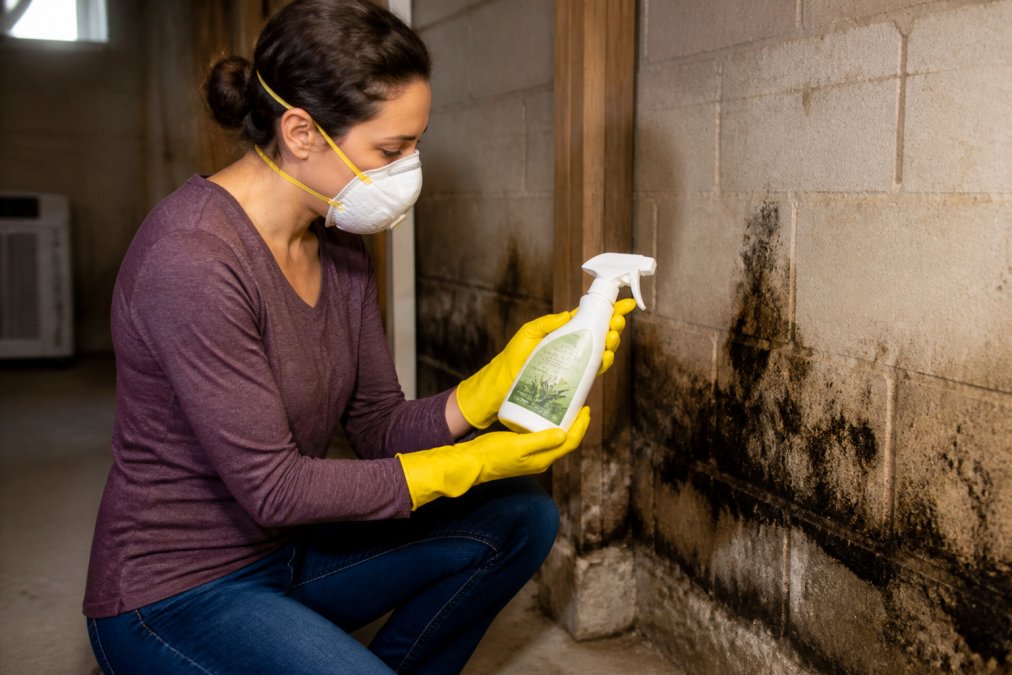
Scrubbing mold without a respirator, gloves, and eye protection is the single most common DIY error. The act of cleaning aerosolizes spores, and you inhale them directly. This is how a small patch becomes a health event.
Professional Mold Remediation Cost and What It Covers
Professional mold remediation cost varies by project scope, and pricing depends on the size of the affected area, the materials involved, and whether structural repair is needed. Because these figures change by contractor and region, get a written quote.
What a professional scope typically includes:
- Moisture detection to find the actual water source
- Containment barriers and negative air pressure to stop cross-contamination
- HEPA vacuuming and removal of porous materials
- Antimicrobial treatment of structural surfaces
- Post-remediation air quality testing to verify spore counts
- Documentation for insurance claims
Comparing Mold Remediation Alternatives: Products and Services
The four main alternatives to DIY mold remediation for health safety range from EPA-registered consumer products to full professional services. Each fits a different situation, and choosing wrong wastes money or leaves you sick. The table below is a starting point, but the real decision hinges on what the mold is growing on, porous versus non-porous material, because that determines whether cleaning is even possible.
| Option | Best For | Key Limitation |
|---|---|---|
| Concrobium Mold Control | Hard, non-porous surfaces; small areas | Not for porous materials |
| Benefect Botanical Decon 30 | Chemical sensitivities; hard surfaces | Higher cost per gallon |
| SERVPRO | Large or structural infestations | Significant cost |
| Dry Ice Blasting | Attics, crawl spaces, framing | Requires specialists |
Material-Specific Protocols: Porous vs. Non-Porous
This is the distinction most guides skip, and it is the one that determines whether a product is even appropriate.
Concrobium Mold Control
Concrobium is an EPA-registered solution that eliminates mold by crushing spores as it dries, without bleach, ammonia, or VOCs. It leaves an antimicrobial barrier behind, which is the feature that separates it from ordinary cleaners.
Benefect Botanical Decon 30
Benefect is a hospital-grade botanical disinfectant that requires no personal protective equipment for application and contains no synthetic fragrances, dyes, or chlorine. For people with chemical sensitivities, that combination is hard to match.
SERVPRO Professional Remediation Services
SERVPRO is a national franchise network offering inspection, containment, HEPA filtration, and full remediation with documentation for insurance claims. The documentation is the underrated part.
Dry Ice Blasting
Dry ice blasting uses pressurized dry ice pellets to strip mold from structural surfaces with no chemical residue and no secondary waste. It is fast and thorough on complex geometry like floor joists and is often used in attics and crawl spaces where media blasting would leave grit behind.
Ask any remediation contractor for post-remediation verification: air quality testing with spore counts before and after. A contractor who resists this is telling you something about their confidence in the result.
No product on this list substitutes for fixing the water source. If you apply any of these and the moisture returns, the mold returns, often within weeks and often larger than before.
When to Stop DIY and Call a Professional
Stop DIY when the affected area exceeds roughly ten square feet, when mold is inside porous materials, when you have a documented health symptom, or when you cannot find the moisture source. Those four conditions cover the vast majority of cases where DIY makes things worse. But the threshold is not just about square footage, it is about what your body is telling you and what your insurance policy will require.
The Health Threshold: Symptoms That Mandate Professional Intervention
Most guides treat mold as a cleaning problem. The more useful framing is that certain symptoms are a stop signal, not a to-do list item.
Post-Remediation Verification: How You Know It Actually Worked
Visual inspection is not verification. Mold can be gone from the visible surface and still present in the air, inside wall cavities, or in the HVAC system.
Liability and Insurance: What DIY Can Cost You Later
This is the part almost no guide covers, and it is often the most expensive.
The Legal Threshold
If a landlord ignored reported moisture or a workplace kept employees in a contaminated building, the cleanup question becomes a liability question. In those situations, the decision to document and preserve evidence matters as much as the decision to remediate. Photograph conditions before any cleaning, keep written communications, and get medical records for any symptoms. That record is what supports a claim later.
The decision rule is simple: if you cannot fix the water source, you cannot fix the mold. Everything else is temporary. And if your body is already reacting, the cleanup is no longer a weekend project, it is a health decision.
Legal Options When Mold Exposure Has Already Harmed Your Health
When mold exposure has already caused documented illness, remediation alone does not address the damage. Medical bills, lost income, and ongoing treatment are recoverable through a toxic mold claim in many situations, and that is where Abkarian Law Group works.
Frequently Asked Questions
Why is DIY mold remediation considered dangerous for health?
Disturbing mold colonies without proper containment releases spores and mycotoxins into the air you breathe. According to EPA mold cleanup guidelines, porous materials like drywall and insulation cannot be fully cleaned and must be removed. Without a respirator mask, Tyvek suit, and negative air pressure setup, you risk cross-contamination to other rooms and worsening respiratory or neurological symptoms. For anyone already experiencing health effects, DIY removal often makes exposure worse before it gets better.
What are the EPA guidelines for mold cleanup?
The EPA recommends fixing the underlying moisture problem first, then addressing mold growth on hard surfaces with detergent and water. Porous materials like ceiling tiles and carpet should be discarded. The agency advises wearing personal protective equipment, including an N-95 respirator, goggles, and gloves, and using HEPA filtration to reduce airborne spores. For contaminated areas larger than 10 square feet, the EPA suggests hiring a professional remediator who follows established remediation protocols.
Can DIY mold removal cause neurological health issues?
Improper removal can increase exposure to mold spores and mycotoxins, which some research links to neurological symptoms like brain fog, memory problems, and headaches. The risk rises when containment is missing, when HVAC systems circulate contaminated air, or when porous materials are disturbed without HEPA vacuuming. If you already have symptoms, stopping DIY work and getting a professional assessment is the safer path. A mold attorney can also advise on documenting exposure for a potential claim.
When should you hire a professional for mold remediation?
Hire a professional when mold covers more than 10 square feet, when it has spread into HVAC systems or structural cavities, when the source of moisture is unresolved, or when anyone in the home has ongoing respiratory or neurological symptoms. Professional remediators use containment zones, negative air pressure, HEPA vacuuming, and post-remediation verification that DIY methods cannot replicate. If your health has already declined, a consultation with a mold attorney can clarify whether you have a legal claim alongside the cleanup.
How do professional mold remediation services differ from DIY methods?
Professional services begin with moisture detection and air quality testing, then build a containment zone with negative air pressure to prevent cross-contamination. They use HEPA vacuuming, EPA-registered fungicides, and material-specific protocols for drywall, wood framing, and HVAC components. After remediation, they perform post-remediation verification to confirm spore counts have returned to normal. DIY methods rarely include containment, verification, or documentation, which matters if you later need evidence for an insurance claim or legal case.
Mold exposure cases are hard to win without the right documentation and medical support, and most people attempt them alone until the deadline passes. Abkarian Law Group brings expert legal guidance for mold injury claims, connections to functional medical professionals, and a track record of substantial settlements to protect your health and legal rights. Book a consultation with Abkarian Law Group and find out what your case is actually worth.
