
Document Mold Exposure for Legal Claims
Table of Contents
- Why Documentation Matters in Mold Exposure Claims
- Documenting Toxic Mold Exposure Symptoms
- Photographing and Preserving Physical Evidence
- Obtaining a Mold Inspection Report for Legal Evidence
- How to Prove Mold Caused Health Issues
- Maintaining a Communication Log with Property Managers
- Understanding Statute of Limitations and Disclosure Laws
- What to Do Immediately After Discovering Mold
- Frequently Asked Questions
Last Updated: September 26, 2026
Why Documentation Matters in Mold Exposure Claims
Documentation is essential in document mold exposure claims. Insurance companies and courts require solid evidence connecting your health problems to mold in your home or workplace. The strongest claims start the moment someone discovers mold. Photos, medical records, and communication logs create a paper trail that supports your legal case.
Documenting Toxic Mold Exposure Symptoms
Your health symptoms are the heart of your claim, but symptoms alone aren’t enough. You must create a detailed record connecting your experience to the mold environment.
Creating a Daily Health Log
Start a health log the day you discover mold, recording date, time, specific symptoms, severity (1-10), duration, triggers, relief measures, and location. This log becomes powerful evidence because it shows a pattern, courts and insurers recognize daily entries as credible. Keep it accessible (phone notes or notebook) and maintain consistency; daily entries beat weekly summaries.
Collecting Medical Records and Diagnoses
Schedule doctor visits and request complete medical records. Be specific about symptoms, when they started, and the mold exposure. Ask your doctor to document the mold exposure and how it may have caused your condition. Collect doctor’s visit notes, test results, prescriptions, specialist reports, and hospital records.
Photographing and Preserving Physical Evidence
Visual evidence of mold is powerful. Photos and videos show the actual problem and eliminate the “I didn’t know it was that bad” defense.
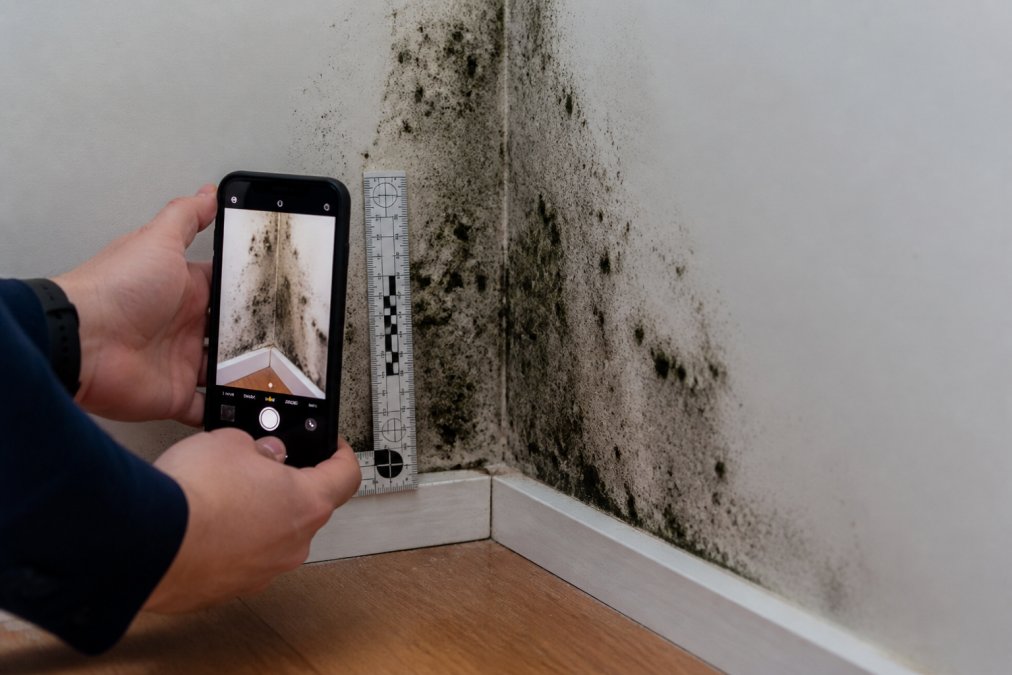
Time-Stamped Photos and Video
Take photos immediately using your smartphone camera (which auto-timestamps). Capture mold from multiple angles with reference objects (ruler or coin) to show scale. Video is stronger, record yourself narrating the affected area, pointing out mold, water stains, and damage. Include visible mold growth, water damage, discoloration, area scope, and moisture.
Digital Evidence Preservation
Create multiple backups in cloud storage (Google Drive, Dropbox, iCloud) and email important files to yourself. Document the chain of custody, note when you took each photo, what device you used, and where you stored it. This proves evidence hasn’t been tampered with. Photograph new mold growth over time; a progression series proves the problem was ongoing, not a one-time event.
Obtaining a Mold Inspection Report for Legal Evidence
A professional mold inspection report is essential for legal claims, providing objective expert documentation.
Hiring a Certified Professional
Hire a certified industrial hygienist or mold inspector with credentials like CMI or CIH. Interview candidates about legal case experience and expert witness testimony. Get the inspection in writing; a professional report documents mold location, extent, type, spore counts, and moisture sources, carrying far more weight than personal observations.
What the Report Must Include
A strong inspection report includes visual assessment, moisture readings, air quality testing, surface sampling, remediation recommendations, professional opinion on mold duration, timestamped photographs, and inspector credentials. The report should state whether conditions meet habitability standards and whether property owner negligence allowed mold development.
How to Prove Mold Caused Health Issues
This is where many claims fail. You must establish causation: proof that the mold actually caused your health problems.
Building the Causal Link
Causation requires connecting mold exposure, your symptoms, and medical science. Build a health timeline: when did symptoms begin, worsen in the moldy area, or improve when you left? Your doctor’s medical records strengthen causation by documenting exposure and diagnosis. Research the specific mold type’s health effects.
Expert Witness Documentation
Expert witnesses often play a crucial role in mold cases. Abkarian Law Group connects clients with functional medical doctors who understand mold toxicity. Expert witnesses can document how mold may cause your symptoms, the exposure-to-symptom timeline, why alternative explanations are unlikely, supporting medical literature, and your prognosis.
Maintaining a Communication Log with Property Managers
Document all conversations with landlords or property managers. Keep a written log with date, time, person’s name/title, what you said, their response, and promised actions. Send emails summarizing phone conversations (e.g., “Per our conversation today at 2 PM, I reported mold in the bathroom. You said you’d send someone to inspect it this week.”).
Understanding Statute of Limitations and Disclosure Laws
Time limits apply to mold claims, and they vary significantly by state. Missing a deadline can permanently bar you from recovery. Understanding your state’s specific rules is essential.
How Statute of Limitations Works for Mold Claims
The statute of limitations is the legal deadline to file a lawsuit. For document mold exposure claims, the clock typically starts when you discover the mold or when you discover it caused your health injury, not when the mold first appeared (the “discovery rule”). Some states apply the “injury rule” (clock starts when injury occurred) or “reasonable discovery” standard (clock starts when a reasonable person would have discovered the mold).
State-Specific Statute of Limitations for Mold Claims
Mold claim deadlines vary widely:
Two-year deadline (most common):
Many states allow mold claims within two years of discovery. This includes:
- California: 2 years from discovery of injury (discovery rule applies)
- Florida: 4 years for property damage, 2 years for personal injury
- New York: 3 years for personal injury claims
- Texas: 2 years from discovery
- Illinois: 2 years from discovery of injury
Three-year deadline:
- New Jersey: 3 years from discovery
- Pennsylvania: 2 years from discovery, but 4 years for latent injury claims
- Massachusetts: 3 years from discovery
Four-year deadline:
- Colorado: 2 years from discovery for personal injury; 3 years for property damage
- Washington: 3 years from discovery
- Oregon: 2 years from discovery
Longer deadlines (rare):
- Some states allow claims within 4-6 years if the injury was latent (hidden or not immediately apparent).
Important caveat: These are general guidelines. Your specific state may have different rules for rental properties versus owner-occupied homes, commercial versus residential exposure, or latent versus obvious mold. Consult an attorney in your state to confirm the exact deadline.
The Discovery Rule and Latent Injury
Mold injuries are often latent, meaning symptoms don’t appear immediately. You might be exposed to mold for months before respiratory problems develop. The discovery rule protects you in these cases.
Under the discovery rule, the statute of limitations begins when you knew or reasonably should have known:
- That mold was present in your home or workplace, AND
- That the mold caused your health injury.
Landlord and Property Owner Disclosure Requirements
Federal and state laws may require property owners to disclose known mold hazards. These disclosure laws vary by state and by property type (rental versus sale). Consult an attorney to understand the specific disclosure requirements in your state.
Using Disclosure Laws in Your Claim
If the property owner failed to disclose known mold, this strengthens your case significantly. It proves negligence. You can argue:
- The owner knew about the mold (or should have known).
- They failed to disclose it to you.
- You would not have rented or purchased the property if you’d known.
- You suffered injury as a result.
Request the property’s history from the owner or real estate records. Look for:
- Previous tenant complaints about mold or water damage
- Insurance claims related to water damage or mold
- Inspection reports from prior sales
- Maintenance records showing mold remediation
Acting Before the Deadline Expires
Don’t wait until the last moment. File your claim or lawsuit well before the statute of limitations expires. Here’s why:
- Discovery takes time: Your attorney needs time to gather medical records, inspection reports, and expert opinions.
- Settlement negotiations take time: Most cases settle before trial. Negotiations can take months.
- Court backlogs exist: If you file near the deadline, you may not get a court date before time runs out.
- Extensions are rare: Courts rarely extend deadlines. Missing it is usually permanent.
What to Do Immediately After Discovering Mold
The first 48 hours matter most. Your immediate actions set the foundation for a successful claim.
Start documenting right away:
- Take photos and video of all mold
- Write down when you first noticed it
- Note any symptoms you’re experiencing
- Report the problem to your landlord or property manager in writing
- Save the written report (email works)
- Schedule a doctor’s appointment
- Keep receipts for any medical visits
Frequently Asked Questions
How do you prove mold exposure in a legal claim?
Proving mold exposure requires multiple forms of evidence working together. You need time-stamped photographs showing visible mold growth, a professional mold inspection report documenting spore counts and affected areas, medical records linking your symptoms to the exposure timeline, and a health history log tracking when symptoms appeared. The strongest claims combine physical evidence of the mold with medical documentation that establishes causation, showing your symptoms align with known toxic mold exposure health effects and that they worsened after entering the contaminated space.
What specific evidence is required to file a toxic mold lawsuit?
Courts require proof of four elements: that mold existed in the property, that you were exposed to it, that the property owner knew or should have known about the problem, and that the mold caused your documented health injuries. Evidence includes dated photographs, professional inspection reports with air quality testing results, written communication showing you notified the landlord or property manager, medical records from your doctor, and expert testimony linking your specific health condition to mold exposure. Written correspondence is particularly valuable because it establishes the property owner’s notice and any negligence in addressing the problem.
How long do you have to file a mold exposure claim?
Statute of limitations varies by state and claim type. Most states allow 2-4 years from the date you discover the injury to file a personal injury lawsuit, though some states measure from when the injury should have been discovered. Renters may have additional protections under state habitability standards and tenant rights laws. Insurance claims often have shorter deadlines, typically 1-3 years. Because deadlines vary significantly and the clock may start from different trigger dates, you should consult with a legal professional immediately to understand the deadline that applies to your specific situation and jurisdiction.
What role does medical documentation play in proving mold caused my health issues?
Medical records are central to establishing causation, the critical link between the mold and your health decline. Your doctor’s notes documenting when symptoms began, how they’ve progressed, and any tests performed create an official timeline. Diagnosis of respiratory symptoms, neurological issues, or chronic health conditions attributed to environmental exposure strengthens your claim. Records showing you were healthy before exposure and deteriorated after entering the contaminated space are especially valuable. When paired with expert medical testimony from a physician familiar with toxic mold exposure health effects, medical documentation becomes the foundation that convinces judges and insurance companies your injuries are real and connected to the mold.
Mold exposure claims are winnable. But they require meticulous documentation and professional guidance. Abkarian Law Group has secured substantial settlements for clients suffering from toxic mold exposure by building ironclad cases with proper evidence collection. We understand how to connect mold exposure to your health issues through medical expertise and legal strategy. Book a consultation with our team to discuss your case and learn how we can help you recover.
