
7 Ways to Document Mold Exposure at Work
Table of Contents
- Why Documentation Is Your Strongest Tool for Mold Exposure at Work
- 1. Photograph Visible Mold and Water Damage
- 2. Keep a Daily Symptom and Incident Log
- 3. Collect Physical Evidence and Air Quality Samples
- 4. Understand OSHA Mold Workplace Guidelines and Your Rights
- 5. How to Report Mold to HR (With a Paper Trail)
- 6. Get Mold Exposure Medical Documentation
- 7. Preserve Digital Evidence and File an OSHA Complaint
- Frequently Asked Questions
Last Updated: September 20, 2026
Why Documentation Is Your Strongest Tool for Mold Exposure at Work
Most mold injury claims collapse for one reason: the worker has nothing in writing. If you are dealing with mold exposure at work, the paper trail you build in the first weeks matters more than anything a lawyer can do later. This guide covers seven ways to document mold exposure at work, from photographing visible growth to filing a formal complaint with the Occupational Safety and Health Administration.
Documentation is the practice of creating a dated, verifiable record of what you saw, when you saw it, and how it affected you. That record carries weight with employers, doctors, and regulators because it exists independently of memory.
The seven strategies below take a few minutes a day. Together they form the evidence base that supports a workers’ compensation claim, a personal injury case, or a regulatory complaint.
Start documenting the day you notice a problem. Evidence gathered weeks after symptoms begin is far weaker than a log that starts on day one.
1. Photograph Visible Mold and Water Damage
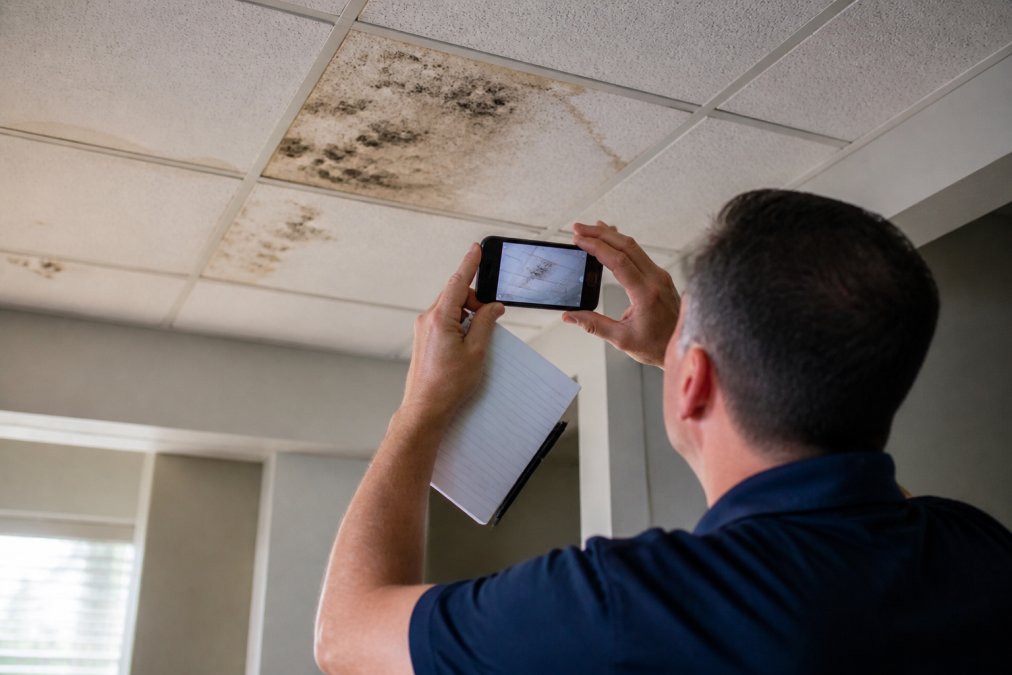
Photograph every area of visible mold, water staining, and moisture damage before anything gets cleaned or painted over. Photos with timestamps are among the most persuasive pieces of evidence in a workplace mold case.
What to Capture and How to Capture It
- Wide shots that show the mold in context: the ceiling tile, the wall behind a desk, the carpet near a break room.
- Close-ups that show color, texture, and spread. Black, green, and gray patches all photograph differently.
- Water sources: stained ceiling tiles, warped baseboards, condensation on HVAC vents, and damp carpet edges.
- Your surroundings in the frame, so no one can claim the photo came from somewhere else.
Use your phone’s camera and keep location services on. Take a photo of a dated object, like a newspaper or your work badge, alongside the damage. Store originals in the cloud rather than deleting them from your phone.
2. Keep a Daily Symptom and Incident Log
A symptom and incident log is a dated written record of when symptoms occur, how severe they are, and what you were doing when they started. This log connects your health decline to specific times and places at work.
Record the basics every day: date, time, location in the building, symptoms, and severity on a simple 1-10 scale. Note anything unusual, such as a musty odor, visible dust from construction, or a coworker reporting the same problems.
Google Keep works well for this. It timestamps every entry, syncs across devices, and lets you attach photos and voice memos. Export the notes periodically so you have a copy outside the app.
Do not wait until symptoms become unbearable to start logging. A gap of months between exposure and your first written entry gives an employer room to argue your symptoms came from somewhere else.
3. Collect Physical Evidence and Air Quality Samples
Physical evidence turns a complaint into a measurable finding. Air sampling and moisture readings show that mold spores and water intrusion exist in the workspace, not just in your description of it.
A few tools make this practical:
| Tool | Starting Price | What It Documents | Best For |
|---|---|---|---|
| MyMoldDetective | $179 | Lab-analyzed air and surface samples | Verifiable spore counts |
| General Tools Moisture Meter (MMD4E) | $30 | Moisture content in drywall and wood | Finding the water source |
| FLIR ONE Edge Pro | $549 | Hidden leaks behind walls and ceilings | Non-invasive inspection |
| NIOSH Dampness and Mold Assessment Tool | Free | Standardized workplace checklist | Official-format records |
| Google Keep | Free | Timestamped notes and photos | Daily logging |
Air Quality vs. Surface Mold: Why Both Matter
Surface mold proves contamination exists. Air quality testing proves you were breathing it. Employers often argue that a small patch of surface mold is harmless, but elevated spore counts in the air you worked in tell a different story. The NIOSH dampness and mold assessment guidance provides a free, standardized framework for recording both.
Follow the sampling instructions exactly. A poorly collected sample is easy to challenge.
4. Understand OSHA Mold Workplace Guidelines and Your Rights
There is no single federal mold standard, but that does not leave you without protection. Employers still have a general duty to provide a workplace free from recognized hazards likely to cause serious harm.
Under the Occupational Safety and Health Act, you have the right to report hazards without retaliation, to request an inspection, and to see records of workplace exposures. Some states run their own OSHA-approved programs with additional requirements, so check which rules apply where you work.
The OSHA worker rights and protections page outlines these rights in plain language. Print it and keep a copy. Knowing the rules changes how you document, because you start recording the specific conditions regulators look for.
5. How to Report Mold to HR (With a Paper Trail)
Report the mold in writing, even if you have already mentioned it verbally. A written report creates a dated record that your employer knew about the hazard, which matters enormously if the problem is ignored.
Send an email rather than speaking in the hallway. Describe what you observed, where, and when, and state what you are asking for: an inspection, remediation, or relocation while the issue is addressed. Keep a copy in a folder separate from your work account.
Communication Templates That Protect You
Use this template and fill in the blanks:
Subject: Written Report of Mold and Water Damage – [Location]
Dear [HR Contact],
I am writing to report visible mold and water damage in [specific location], which I first observed on [date]. I have attached photographs taken on [dates].
I have experienced [list symptoms] at work since [date]. I am requesting an inspection by a qualified professional and remediation of the affected area.
Please confirm in writing what steps will be taken and by when.
Thank you,
[Your name]
Send a copy to your personal email immediately after sending. If you are later locked out of your work account, you still have the record.
6. Get Mold Exposure Medical Documentation
Medical records are the bridge between the building and your body. A doctor’s notes, test results, and treatment history establish that your symptoms are real and timed to your exposure.
Tell your doctor about the workplace conditions specifically. Ask them to note in your chart that you reported mold exposure at work and the date you first noticed symptoms. If your doctor dismisses the connection, seek a second opinion from a physician experienced with environmental illness. Abkarian Law Group connects clients with functional medical professionals who understand mold-related health issues.
Bring your symptom log to every appointment. A physician reviewing a dated record of symptoms is far more likely to note a pattern than one hearing a vague description.
7. Preserve Digital Evidence and File an OSHA Complaint
Digital evidence is easy to lose and easy to challenge, so preserve it deliberately. Back up photos, emails, and logs to a personal cloud account, not just your work devices. Export Google Keep notes monthly. Save original file formats rather than screenshots of screenshots.
If your employer does not act, you can file a complaint with OSHA.
Frequently Asked Questions
How do I prove mold exposure at work?
Build a documented record using photos of visible mold, a dated symptom log, and lab-analyzed air or surface samples. Report the issue to HR in writing and keep copies. If your employer does not act, file a complaint with OSHA. Medical records linking your symptoms to mold exposure strengthen the claim. An attorney experienced in mold toxic tort cases can help you organize this evidence and pursue compensation.
What does OSHA say about mold in the workplace?
OSHA does not have a specific mold standard, but the General Duty Clause requires employers to provide a workplace free from recognized hazards likely to cause death or serious physical harm. Mold growth from unchecked moisture qualifies as such a hazard. OSHA also enforces hazard communication and respiratory protection standards when mold remediation creates airborne spores. You can file a complaint with OSHA if your employer fails to address mold.
Can I sue my employer for mold exposure?
Yes, in many cases. Workers’ compensation may cover medical costs and lost wages, but if the exposure resulted from gross negligence or intentional disregard for safety, you may have grounds for a personal injury lawsuit. An attorney can review your incident log, medical documentation, and employer communications to determine the strongest legal path. Time limits vary by state, so consult a lawyer promptly.
How do I report mold to HR without retaliation?
Submit a written report via email or a dated memo describing the mold location, your symptoms, and any prior verbal complaints. Keep a copy. Request a written response and a timeline for remediation. If retaliation occurs, document it immediately. OSHA whistleblower protections apply to employees who report workplace hazards. A clear paper trail discourages retaliation and supports your case if it happens.
What should I include in a mold exposure symptom log?
Record the date, time, and location of each exposure. Note symptoms like headaches, coughing, shortness of breath, or neurological issues, and rate their severity. Include any witnesses, weather conditions, or workplace activities that might affect air quality. Attach photos or voice memos if helpful. A consistent, detailed log creates a timeline that links your symptoms to the workplace environment and supports medical documentation.
Mold cases are won and lost on records. If your health has declined because of mold at work and your employer has done nothing, Abkarian Law Group can help you turn that documentation into a claim. Our team is a leader in mold toxic tort cases, connects clients with functional medical doctors, and has a proven record of winning substantial settlements. Book a consultation and find out what your evidence is worth.
