
How to Test for Mold in Rental Property
Table of Contents
- Why Testing for Mold in Your Rental Matters
- Signs of Hidden Mold in Your Apartment
- DIY Mold Test Kit for Apartment Use
- Professional Mold Inspection for Rental Properties
- Step-by-Step Inspection Process for Your Rental
- How to Report Mold to Your Landlord
- Common Mistakes to Avoid When Testing for Mold
- When to Seek Legal Help for Mold Issues
- Frequently Asked Questions
Last Updated: October 8, 2026
Why Testing for Mold in Your Rental Matters
If you’re renting and suspect mold, you need to act. Respiratory problems, allergies, and chronic symptoms often stem from mold exposure in rental apartments and homes (the CDC).
The challenge is this: many renters don’t know how to test for mold in rental property, or they’re unsure whether they have the right to test at all.
At Abkarian Law Group, we understand the frustration. You’re sick. Your landlord isn’t responding. You need proof.
Signs of Hidden Mold in Your Apartment
Visible Mold and Discoloration
The easiest sign to spot is mold you can actually see. Look for dark spots, fuzzy growth, or slimy patches on surfaces. Mold appears black, green, brown, or white.
Check these high-risk areas first:
- Bathroom walls and ceiling
- Around window frames and sills
- Under kitchen sinks
- Basement corners and walls
- HVAC vents and ducts
- Carpet edges near moisture sources
Discoloration doesn’t always mean mold. Water stains can look similar. But if the spot feels fuzzy or slimy, or if it appears after water damage or a leak, assume it’s mold until proven otherwise.
Musty Odors and Other Indicators
You smell something off. That musty, earthy odor is often the first sign of hidden mold. The smell comes from mold spores and compounds released as mold grows. You might notice it in one room or throughout your apartment.
Other warning signs include:
- Condensation on windows that won’t go away
- Visible water stains on walls or ceilings
- Peeling paint or wallpaper
- Soft or warped drywall
- Dampness in carpets or rugs
- Increased allergy symptoms or respiratory irritation indoors
If you experience headaches, coughing, or throat irritation only when you’re home, mold could be the culprit. Document when symptoms appear. This matters later if you need to take legal action.
DIY Mold Test Kit for Apartment Use
How DIY Kits Work
Home mold test kits are available at hardware stores and online. They’re affordable and easy to use. Most kits work by collecting air or surface samples, then sending them to a lab for analysis.
Here’s the basic process:
- Open the collection device (usually a petri dish or swab)
- Expose it to the air or rub it on a suspect surface
- Seal and label the sample
- Mail it to the lab with the included prepaid envelope
- Wait 5-10 days for results
The lab cultures the sample and identifies what type of mold is present. You get a report showing mold species and spore counts.
Collect multiple samples from different rooms. One sample from your bedroom and one from the bathroom gives you better evidence than testing just one spot. This also helps prove the problem is widespread, not isolated.
Limitations of Home Test Kits
Here’s what most renters don’t know about how to test for mold in rental property: home test kits have serious limitations. They can tell you mold is present, but they can’t tell you where it’s hiding or how bad the problem really is.
Key limitations include:
- Air sampling only shows spores in the air right now. If the mold is in a wall cavity, you might get a negative result.
- Surface samples depend on where you swab. Miss the actual mold colony by an inch, and you get a false negative.
- Results don’t prove the mold caused your health symptoms. A positive test shows mold exists, not that it’s making you sick.
- Lab quality varies. Some labs aren’t accredited. Results from an unaccredited lab won’t hold up in court.
- Timing matters. Humidity, temperature, and recent cleaning affect results. A test done on a dry day might miss mold that appears after rain.
For rental situations, a DIY kit can be a starting point. But if you’re considering legal action, you’ll need professional testing.
Professional Mold Inspection for Rental Properties
What a Professional Inspector Examines
A professional mold inspector does what a DIY kit cannot. They inspect your entire apartment systematically. They look for visible mold, water damage, moisture sources, and conditions that allow mold to grow.
A thorough inspection includes:
- Visual examination of all rooms, including closets and storage areas
- Moisture readings on walls, ceilings, and floors
- Inspection of HVAC systems and ductwork
- Assessment of ventilation and humidity levels
- Documentation of water stains, leaks, or condensation
- Photos and written notes of all findings
The inspector creates a detailed report. This report becomes evidence. It shows what mold is present, where it is, and what caused it. For renters, this documentation is critical.
Air and Surface Sampling Methods
Professional testing goes deeper than home kits. Inspectors collect samples using proper protocols. They use calibrated equipment and send samples to accredited labs.
Air sampling captures mold spores floating in indoor air.
Surface sampling involves swabbing or tape-lifting mold from walls, carpets, or other materials.
A professional might also use:
- Moisture meters to find hidden moisture behind walls
- Thermal imaging to spot temperature differences that indicate water intrusion
- Humidity monitors to track moisture levels over time
Professional samples cost more than DIY kits. But they’re admissible as evidence. They come with chain-of-custody documentation.
Step-by-Step Inspection Process for Your Rental
Inspect High-Risk Areas
Start with the rooms most likely to have mold. Bathrooms and kitchens have moisture. Basements stay damp. Bedrooms with poor ventilation trap humidity.
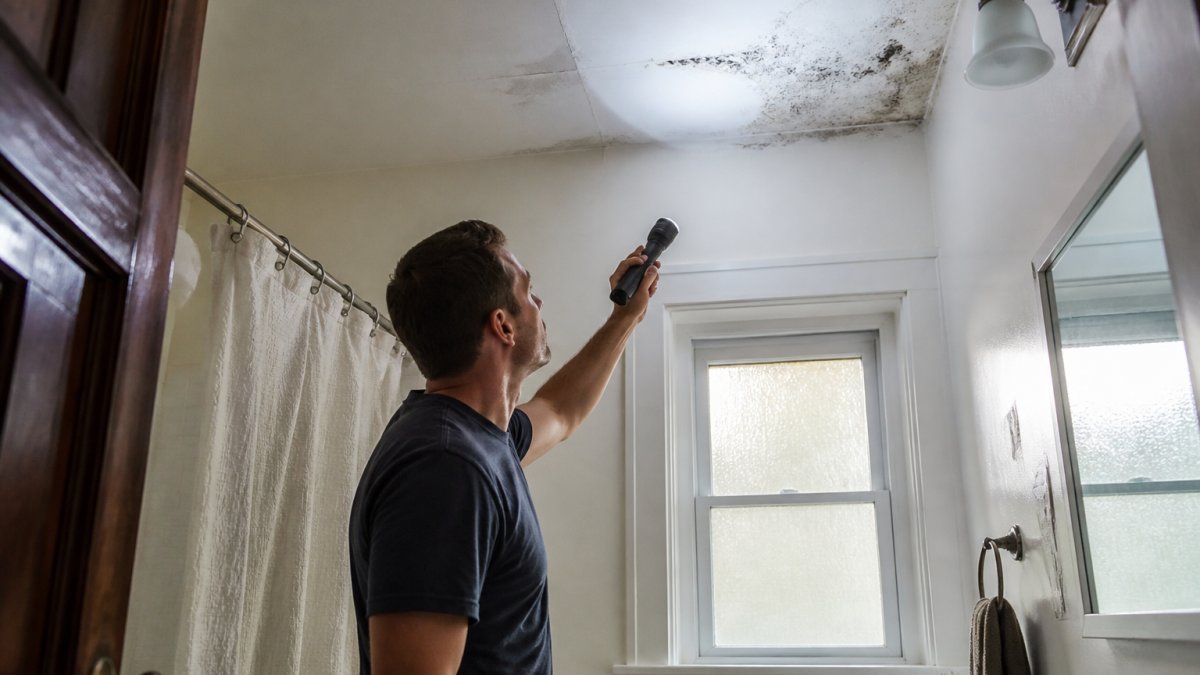
Follow this sequence:
- Bathroom: Check the ceiling, walls, and corners. Look behind the toilet. Inspect under the sink. Check the shower enclosure and grout lines.
- Kitchen: Examine under the sink and around the dishwasher. Look at the ceiling near the stove. Check for leaks around pipes.
- Basement or crawl space: Inspect all walls and corners. Look for water stains or efflorescence (white salt deposits). Check the floor for standing water or dampness.
- Windows and doors: Look at frames and sills. Check for condensation or water damage around seals.
- HVAC system: If accessible, inspect air vents and return air grilles. Look for mold on filters.
Use a flashlight. Mold hides in shadows and corners. Don’t rely on natural light alone.
Document Your Findings
Take photos and notes. This documentation is your evidence. It shows what you found, when you found it, and where it is.
Document everything:
- Photos: Take clear, dated photos of any visible mold, water stains, or damage. Include wide shots and close-ups.
- Written notes: Record the date, time, location, and description of what you see. Note any odors or symptoms you experience.
- Measurements: If mold covers a large area, estimate the size.
- Moisture readings: If you have a moisture meter, record readings from suspect areas.
- Health symptoms: Log any respiratory symptoms, headaches, or allergies that appear during or after your inspection.
Store everything in a folder or digital file. Include the date on each item. This creates a timeline. It shows the problem existed and when you discovered it.
How to Report Mold to Your Landlord
Written Notice and Evidence Preservation
Never report mold verbally. Your landlord might deny it later. Send written notice. Keep a copy.
Here’s what to include in your notice:
- Date of the notice
- Specific location of the mold (bathroom, bedroom, basement, etc.)
- Description of what you observed (visible mold, musty odor, water stains)
- Photos attached to the notice
- Date when you first noticed the problem
- Any health symptoms you’ve experienced
- Request for inspection and remediation within a specific timeframe (typically 14-30 days)
- Statement that you expect written confirmation of receipt
Send the notice via certified mail with return receipt requested. This proves your landlord received it. Keep the receipt and a copy of the letter.
Do NOT attempt to clean extensive mold yourself. Disturbing mold releases spores into the air. This can worsen your symptoms and spread contamination. Report it to your landlord. Let a professional handle remediation.
Understanding Your Tenant Rights
Tenant rights regarding mold vary by state. But most states require landlords to provide habitable housing. Mold that affects health violates the “implied warranty of habitability.”
What this means:
- Your landlord must maintain the property in safe condition
- Your landlord must respond to mold complaints in reasonable time
- Your landlord cannot retaliate against you for reporting mold
- You may have the right to withhold rent or repair-and-deduct in some states
Some states allow tenants to break a lease if mold makes the unit uninhabitable. Others require the landlord to remediate within a set timeframe.
The specific rules depend on where you rent. Consult local tenant rights organizations or an attorney to understand your state’s requirements.
Common Mistakes to Avoid When Testing for Mold
Don’t skip the inspection because you think testing is too expensive. Don’t assume one negative test means there’s no mold. Don’t delay reporting to your landlord hoping the problem goes away.
Avoid these errors:
- Testing without documenting the process. Take photos of the collection area and the sample before sealing it. This proves where the sample came from.
- Relying on a single sample. Test multiple rooms and surfaces. One negative result doesn’t rule out mold elsewhere.
- Ignoring moisture sources. Mold needs moisture to grow (the EPA). If you don’t address leaks, humidity, or condensation, mold will return.
- Cleaning visible mold before testing. If you see mold, photograph it first. Then report it. Testing after cleaning gives false negatives.
- Accepting a landlord’s verbal promise to fix it. Get written confirmation. Mold remediation takes time and proper technique. Verbal promises disappear.
- Waiting too long to report. The longer you wait, the worse the problem becomes. Report it immediately in writing.
When to Seek Legal Help for Mold Issues
If your landlord ignores your written notice, doesn’t remediate in reasonable time, or retaliates against you for reporting mold, legal action may be necessary.
Consider consulting an attorney if:
- Your landlord refuses to inspect or address the mold
- Your health has declined due to mold exposure
- You’ve incurred medical bills related to mold exposure
- Your landlord threatens eviction after you report mold
- The landlord claims you caused the mold (when you didn’t)
- You need to break your lease due to uninhabitable conditions
An attorney can review your lease, your documentation, and your state’s tenant laws. They can send a formal demand letter.
Abkarian Law Group specializes in mold-related injury claims. We understand how mold affects your health and your rights as a tenant.
If you’re dealing with mold in your rental and your health is suffering, don’t wait.
Frequently Asked Questions
How can I tell if there’s hidden mold in my rental apartment?
Hidden mold often reveals itself through musty, earthy odors before you see visible growth. Check areas with moisture exposure: around windows, under sinks, in HVAC vents, and basement corners. Look for water stains, discoloration, or soft spots on walls and ceilings. If you notice allergic reactions, respiratory irritation, or condensation buildup, mold may be present even if not visible. A professional mold inspection can identify growth behind walls and in ventilation systems that DIY methods miss.
Should I use a mold test kit for my apartment or hire a professional?
A mold test kit for apartment use is useful for initial screening if you suspect mold, but results have limitations. DIY kits cannot identify mold species or assess whether levels pose health risks. Professional mold inspection provides air and surface sampling with laboratory analysis, identifying hidden growth and moisture sources. If you have health symptoms, visible mold, or significant water damage, professional testing is more reliable. If you’re renting and need documentation for your landlord, professional results carry more weight in disputes.
What’s the best way to document and report mold to my landlord?
Document everything in writing. Take dated photos and videos of visible mold, discoloration, and water damage. Send your landlord a written notice describing the mold location, any health symptoms, and your request for inspection and remediation. Keep copies of all communications. If the landlord doesn’t respond, follow up with a second notice referencing the first. Many states require landlords to address habitability issues within specific timeframes. If your landlord fails to act, consult a local tenant rights organization or attorney about your options.
What happens if my landlord refuses to address mold in my rental?
Landlord responsibilities for mold vary by state, but most require landlords to maintain habitable premises, which includes controlling moisture and mold. If your landlord ignores written notice, you may be able to withhold rent (in some states), break your lease, request repairs at landlord expense, or file a complaint with local housing authorities. Health impacts from prolonged exposure strengthen your case. If you’ve suffered health complications from mold exposure, consulting an attorney experienced in mold liability claims can help you understand your legal options and potential remedies.
